When wildfires tore through Los Angeles County a year ago today, the damage was immediate — lives and homes lost, neighborhoods devastated, families displaced. But once the flames were out, another difficult chapter began: rebuilding lives and communities in a way that is safer, stronger, and more resilient for the long term.
That’s where the Governor’s Office of Land Use and Climate Innovation (LCI) has focused its efforts the past year.
LCI co-leads California’s Community Assistance Recovery Support Function alongside partners at the California Governor’s Office of Emergency Services and the Federal Emergency Management Agency. Together, they’ve worked behind the scenes to help communities move from emergency response toward long-term recovery.
Listening First, Acting Fast
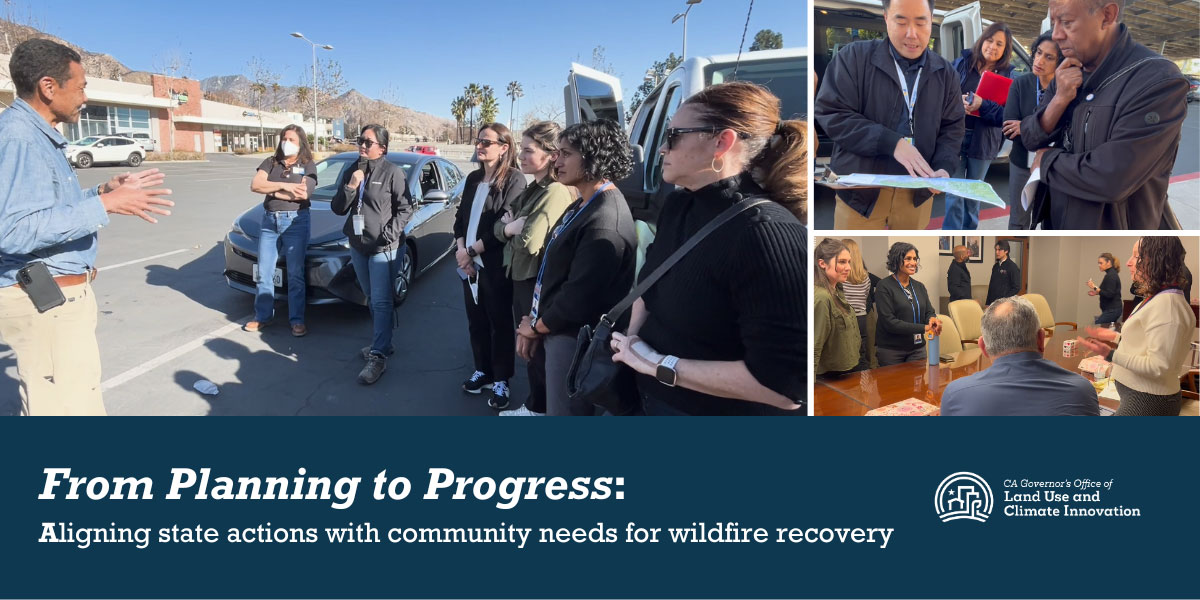
In the days immediately following the disaster declarations, LCI and its partners began engaging directly with affected cities, Los Angeles County, and local agencies. The goal was simple but urgent: understand what communities were facing on the ground — and what they needed most.
“When we arrived in Los Angeles, our job wasn’t to tell communities what to do — it was to listen,” said Samuel Assefa, Director of LCI. “We’re not first responders, so the way we help starts with understanding what families, cities, and local leaders are living through and what support they need most. That listening guided every action we took in those early days, and continues to do so today.”
These early conversations helped assess the scope of damage, identify immediate gaps, and begin coordinating recovery efforts across agencies and jurisdictions.
“We were grateful for their immediate attention and recognition of the scale of these two disasters,” said Amy Bodek (AICP), Director of Regional Planning with the County of Los Angeles. “Initial resources and ideas shared helped us immediately deliver benefits to survivors.”
Turning Needs into a Recovery Roadmap
A critical next step was the creation of a Recovery Needs Assessment (RNA) — a comprehensive effort to identify and prioritize the biggest challenges standing in the way of rebuilding.
“Being on the ground with communities in those first days helped us see the gaps, understand the urgency, and start moving resources and partners toward where they were needed most,” recalled Assefa.
LCI staff co-led the Community Planning and Capacity Building portion of this assessment, working closely with state and federal partners and incorporating input from local governments and community collaborators. The RNA focused not just on what was lost, but on how recovery could support safer housing, resilient infrastructure, and long-term community stability.
From there, partners developed a Recovery Support Strategy (RSS) — a practical roadmap that connects identified needs to real projects, responsible partners, and potential funding sources. This strategy helped clarify who could do what, where resources might be available, and how communities could move from planning to action.
“These insights directly shaped our City Council led Strategic Planning process, with a strong focus on long-term resilience,” said Richard Rojas, Deputy City Manager for the City of Malibu. “As a result, Malibu is better prepared to work with regional, state, and federal partners on economic recovery, wildland fire management, and post-wildfire watershed recovery.”
Behind the scenes work like the RSS help state leadership coordinate recovery efforts, including issuing executive orders to streamline CEQA and permitting requirements, and fast-track construction resources for homeowners, local businesses and governments. That alignment between community and state is how recovery moves from plans on paper to real progress in neighborhoods.
“As a Cabinet agency, our responsibility is to stay closely connected to communities and bring their needs directly back to the Governor,” said Assefa. “The Recovery Support Strategy grew out of what we heard on the ground — families wanting to rebuild quickly, cities overwhelmed, and communities doing their best to hold together. Because those voices were elevated quickly, state leaders were able to act.”
Supporting the Long Road Ahead
As we reflect on the year milestone of the L.A. fires, LCI continues to play a central coordination role in long-term recovery. Today, the Community Planning and Capacity Building team holds monthly recovery meetings with county and local partners to track ongoing needs, surface new challenges, and identify gaps in data or resources.
The team helps connect communities to state and federal funding programs, planning tools, and technical assistance — and, when possible, provides direct support to help local partners take their next steps toward long-term recovery.
This work is not always visible. But it is essential. It helps ensure that recovery is not rushed, fragmented, or inequitable — and that communities most impacted by disaster have a real voice in shaping what comes next.
Why This Work Matters
Disasters don’t end when the smoke clears. Recovery takes years — and without strong coordination, there’s a risk that communities get left behind.
By co-leading the Community Assistance Recovery Support Function, LCI is helping turn crisis into opportunity: supporting thoughtful planning, smarter investments, and recovery strategies shaped by the people who call these communities home.